01 / The job
TodayStart with your standard.
How it is held. Where it goes. When it is done right. The person who knows the work sets the bar.


Any task. Any robot. Operator included.
Customer story
Mary wanted help steaming garments. We brought a wheeled robot into her Singapore stockroom and operated it remotely.
Fold, sort, pack, stock, count. Pick your setting and the examples change. The robot, the model and the stack stay the same.
How it works
A person drives the robot first. Every session of real work teaches the model. Each lap, the robot needs them less.
01 / The job
TodayHow it is held. Where it goes. When it is done right. The person who knows the work sets the bar.
02 / Human in the loop
TodayThe operator connects through robot-stack from anywhere, even another country: about 8 ms from Malaysia to Singapore, about 60 ms from India. Every session of real work becomes data about this task.
03 / Post-train
In buildWe post-train a model on that data, for this task, in this place. It has to meet your standard before it works alone.
Autonomous folding · demonstration · 10× speed04 / Deploy and step in
In buildThe robot works with an operator on call. Each intervention shows it the fix. Those moments are the most valuable data we collect.
Laundromat · commercial laundry · field work05 / One operator, more robots
TargetAs the robot handles more of the job, one operator can look after several. That is what makes robot labour affordable.
06 / The next task
TargetSkill in one task opens the ones beside it. Same robot, same place, a new lap of the loop.
You pay for work done to your standard. As autonomy grows, each operator’s time goes further, and the cost of that work comes down.
Start with one task →The deployment harness
robot-stack sits between AI models, robot hardware and the work on site. A coding model needs an agent harness to do real work. Robots need one too.
AI modelsswap the model
Run
Guard
Learn
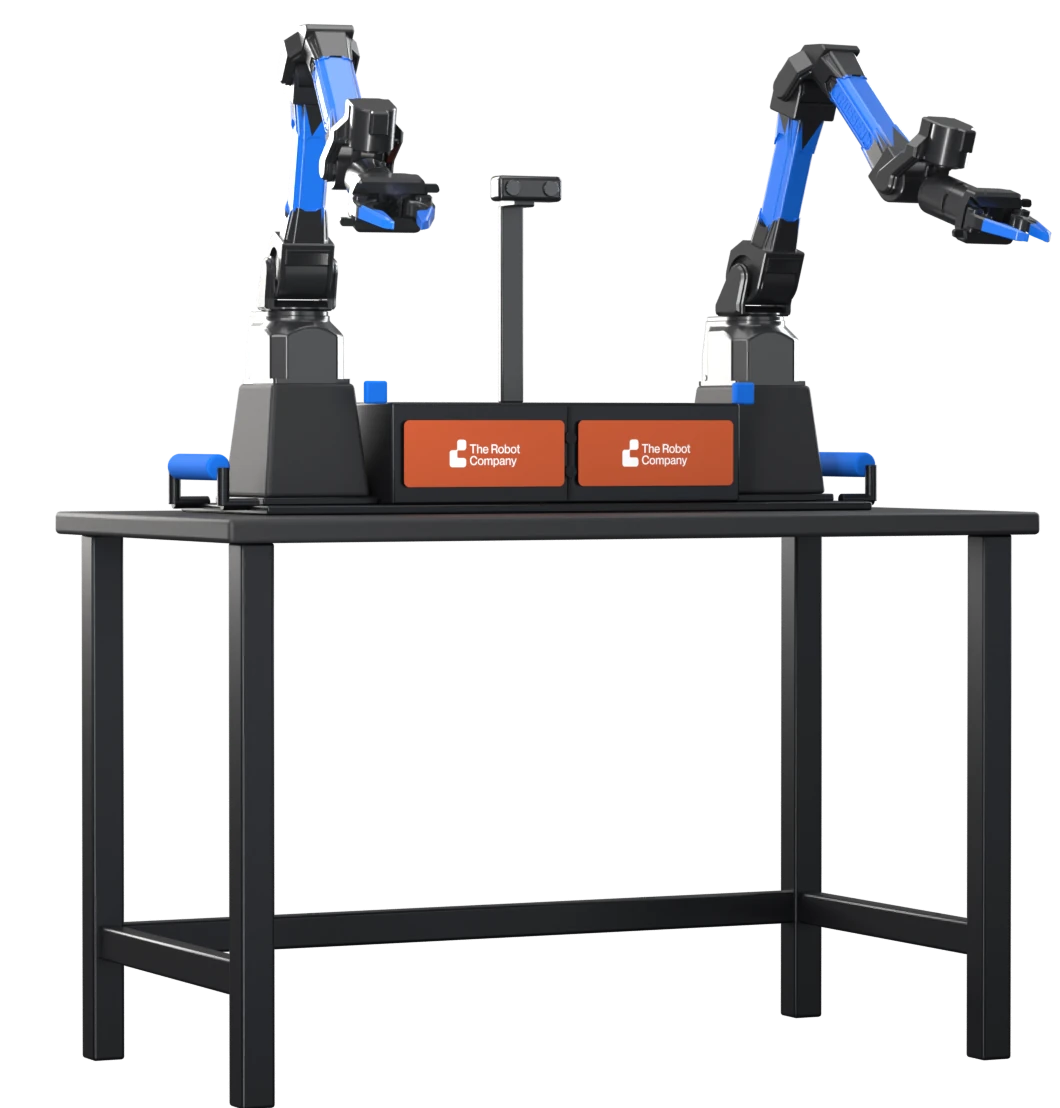
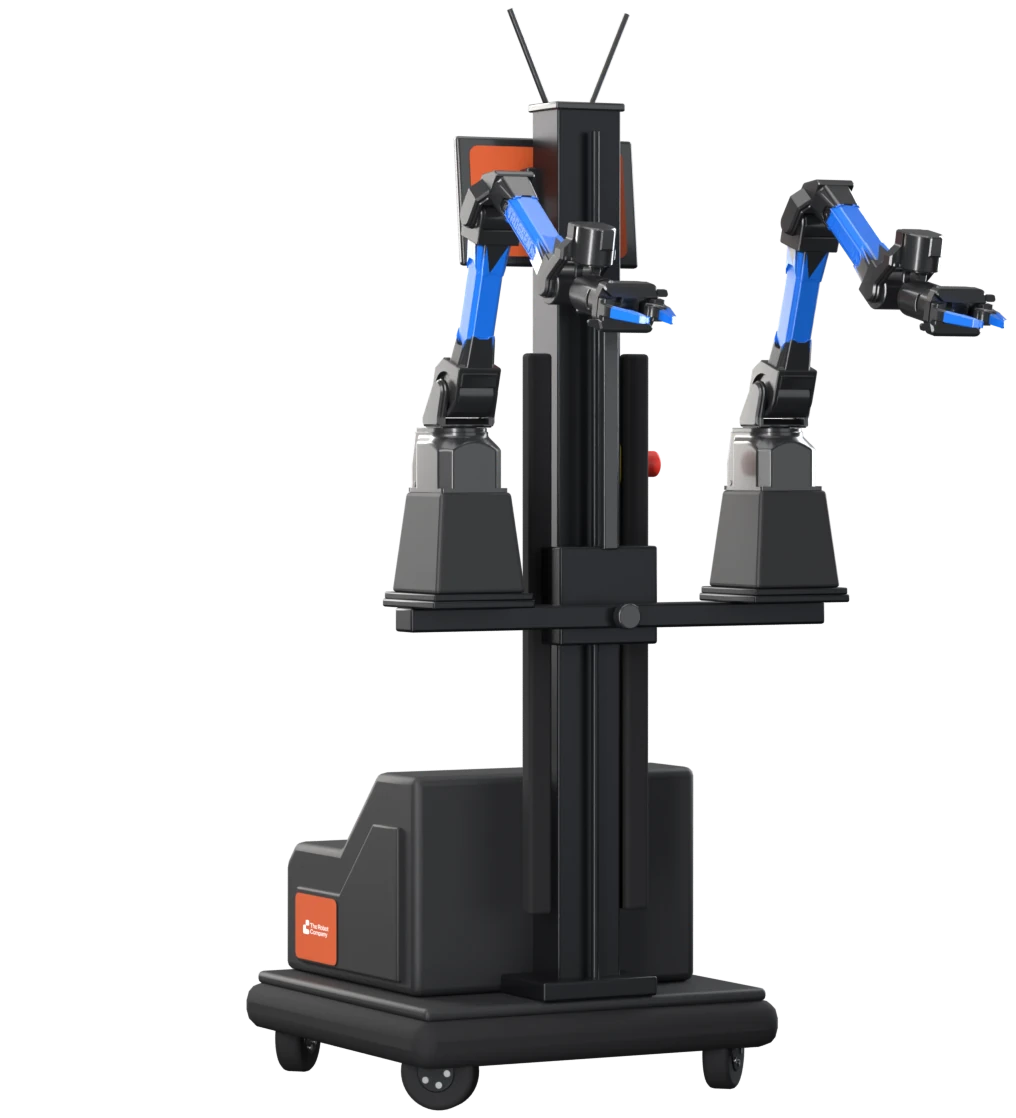
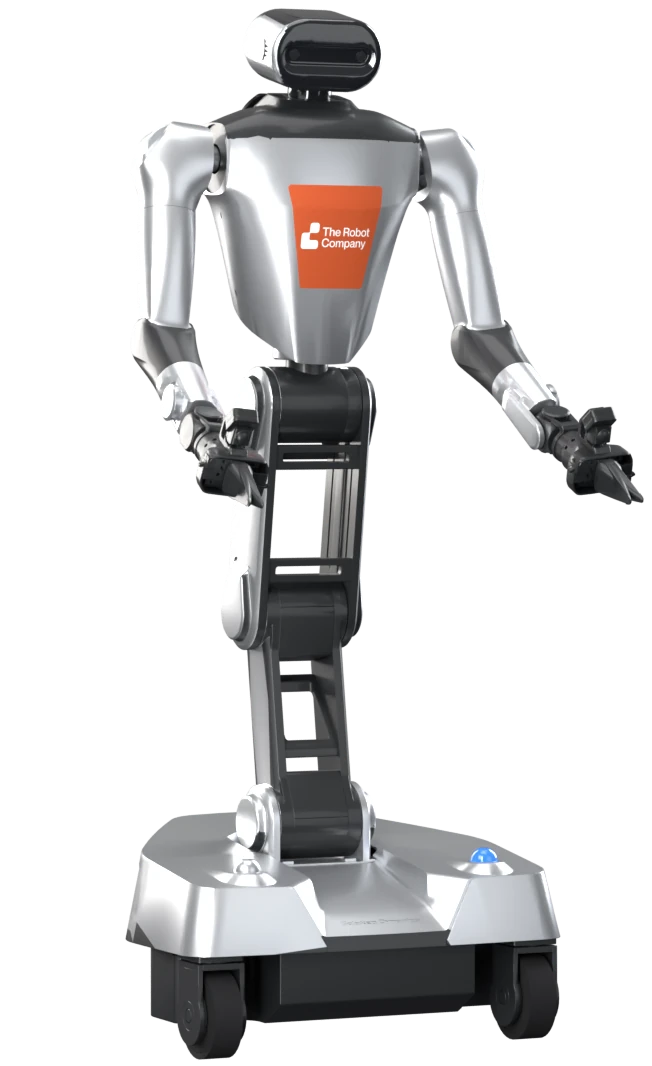
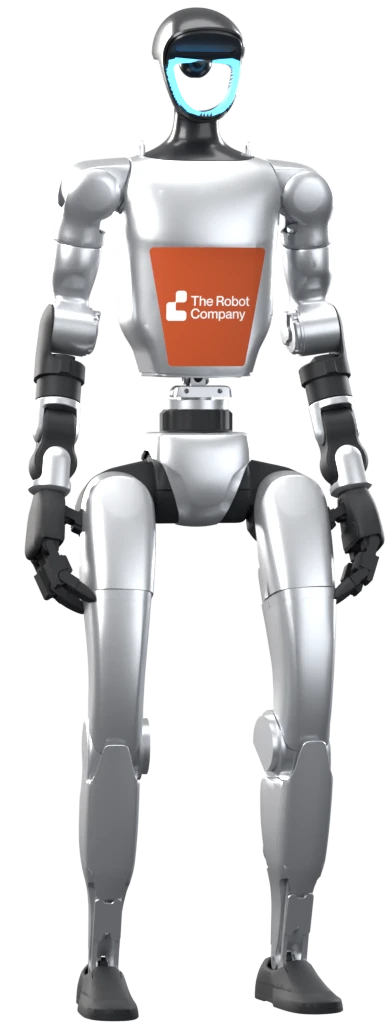
Different robots suit different work. We fit the robot to your job, and a person backs it up.
Bring your model or your robot. We put it to work on real jobs and show you how it holds up.
Each better model ships into deployments that already run. What we learn on one task carries to the next.
Writing
Enterprise / Built around your operation
We bring robots, software and human support to your operation. Together we test a task that matters, and build towards supervised autonomy.
Work in view
For Singapore retail
Most outlets have one job that keeps good people in the back room. Pick it.
The work agreement
Agree the task, item mix and finish standard. Make handoffs and acceptable human help explicit.
Run the task in its real setting. Include loading, resets and recovery in the result.
Develop and evaluate policies against the same standard. Introduce supervised autonomy as requirements are met.
Robot hardware, our robot-stack software, integration and operating support.
Workflow knowledge, site access and agreed handoffs.
What counts as progress
Quality and finish
In your workflow
Every assist and reset
Per accepted unit
Customer story / Singapore
Mary wanted more of her team’s time on the shop floor. We brought a robot into her stockroom to steam garments, with an operator in control.
Today, people guide the work. We’re building towards a robot that handles more of Mary’s steaming, with human help when it matters.
01 / The job
TodayHow the fabric is held. Where the steam goes. When the garment is ready. The person who knows the work sets the standard.
02 / Human expertise
TodayPeople guide the early work. Through robot-stack, an operator brings dexterity and judgment to the robot.
03 / Useful work
TodayA useful task, in the place it needs to happen. Garment steaming gives us a concrete job to improve.
04 / Task experience
In buildDemonstrations show how the work is done. We’re connecting them to training and evaluation, so new policies earn their place on the job.
01 / The job
TodayHow the fabric is held. Where the steam goes. When the garment is ready. The person who knows the work sets the standard.
02 / Human expertise
TodayPeople guide the early work. Through robot-stack, an operator brings dexterity and judgment to the robot.
03 / Useful work
TodayA useful task, in the place it needs to happen. Garment steaming gives us a concrete job to improve.
04 / Task experience
In buildDemonstrations show how the work is done. We’re connecting them to training and evaluation, so new policies earn their place on the job.
05 / Supervised autonomy
Target05 / Supervised autonomy
A task policy handles the steaming.
An operator corrects an exception.
Control is deliberately handed back.
Writing
Robots, the work they do, and what that could mean for the people running a business.
11 November 2026
What changes when a robot needs less of a person’s time?
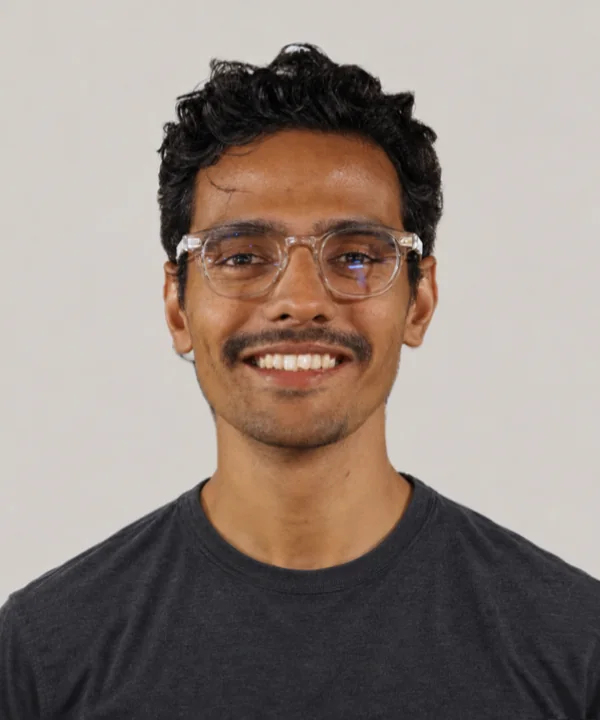
The question I get asked the most is some version of this. Aren’t you a services business?
I get why it feels like that. Today we put a robot into a business and a person operates it from somewhere else. One person, one robot. Freeze it there and I agree with you. It looks like a staffing agency with expensive equipment.
But I think the question comes from today. It comes from not yet living in the world where the models are really good and the robots are really good. I’ve been living in that world for a while now. This is what it looks like from inside.
Start with the models.
In April last year Dyna let a pair of arms fold napkins for 24 hours straight and reported 99.4%. One task, one room, their own test.
This April Physical Intelligence put its new model on a pair of arms it had never folded a shirt with. It got 80%. Their expert operators, trying it on those arms for the first time, got 80.6.
In July Sunday Robotics reported 99.1% across 785 attempts. Nine kinds of garment, in homes the robot had never seen, with nothing tuned for the home.
These are company numbers. Nobody has audited them and you should read them that way. But look at the direction. Folding was the task everyone used to explain why robots are hard. In a little over a year it went from a research problem to a deployment problem.
Now the robots.
Unitree’s IPO filing says the average price of its humanoids went from about $85,000 in 2023 to about $25,000 in 2025. Goldman Sachs wrote in 2024 that the cost to build one had dropped 40% in a year, when their own analysts expected 15 to 20. The arm we deploy costs about US$2,000.
The line in that filing I keep going back to is a different one though. 73.6% of Unitree’s humanoid revenue came from research and education. The robots got cheap, and they mostly went to labs and classrooms.
So price isn’t what is keeping robots from work.
I’ll be honest, none of this is contrarian. Everyone I meet believes the models and the hardware are going to get really good. I think that is the contrarian approach now. To be not that contrarian. To take both as a given, look past the noise, and just focus on deployments.
That’s the bare minimum, actually. At 99%, 1,000 items a day is still ten failures a day, and the customer needs all ten fixed. They’re not paying for 990. They’re paying for work done to their standard.
In August Dyna published a number I think more people should look at. They took two generations of their model to customer sites that neither had seen. Graded against what the customer would accept, the older one passed 46% of the time. The newer one passed 87%. In their own lab both were at about 100.
About 100 in the lab. 87 at the customer. And 87 was a huge jump.
I think that gap is the business. The models will keep getting really good, and there will still be a last stretch at the customer’s site that a bigger model doesn’t close. It closes when somebody knows the job. Even something as small as where to grasp a stack. You grasp it in the middle, right? Grasp it by the corner and it’s fine in the demo, and then on a normal day it falls.
A lot of deployments fail right here, and I think for two reasons. Companies promise autonomy too early, without a stack that can handle the long tail. And that stack is not just software. The stack is real people. Or they pick the wrong task. Pick the wrong task and you can’t bring the interventions down, you never hit autonomy, and you fail in front of the customer even though you’re building in the right direction.
So who does that work?
There are model makers and there are robot makers. Some companies are both. They call themselves research-driven deployment companies. Dyna is the best of them and I think they’re very, very good.
I think there’s a third thing to be, and we don’t have to look very far to see it. Look at language models. The model makers got really good, and a whole set of companies grew up on top of them building agents. In February Physical Intelligence described the same thing for robots. They called their models a layer that other companies build on. One partner in that post folds laundry for businesses, with remote specialists stepping in to fix a fold. With that partner’s data in the model, interventions dropped by half.
That is what we are. The agent builder. We don’t pre-train a model and we don’t manufacture a robot. A good agent has to be model agnostic, especially if it’s going to take a physical form, because the cost of upgrading it once it’s at work is extremely high. So robot-stack takes any model and any robot.
But you cannot just be a software provider. You have to deploy the robots. That’s the difference. That is the defining difference.
Once the model is good and the robot is cheap, the expensive part is the person. If someone controls a robot for a whole shift, you’re still paying for a whole shift of their time, plus the robot.
So two numbers decide what kind of company this is. How much of a person’s time each robot needs. And how much engineering each new deployment needs. If those two don’t fall, the people asking me that question are right.
I think they fall. I don’t think it’s true that this doesn’t scale. It scales by bringing the operator remote, and then it scales by bringing the cost of remote down.
The robot has to be on site. The person helping it may not. We measure about 8 milliseconds from Malaysia to Singapore and about 60 from India. Today one operator drives one robot. Next the model learns the job from those sessions, and the operator stops driving and starts stepping in. Every time they step in, the robot is shown the fix. One to one becomes one to three. Then one to ten. People on this team have trained a hundred teleoperators and run the operations behind a robot foundation model before.
Waymo says it has about 70 remote assistance people on duty at any time, for a fleet of 3,000 cars. That’s one person for every forty-odd cars, and they’re not even driving. The car asks and they answer. Waymo didn’t start there either.
The second number falls a different way. Every robot we deploy runs on the same control stack, and the training we give an operator doesn’t change from robot to robot. What we learn on one task carries to the next. All of it is to bring the cost of the work to par with labour, and then below it. Even at par, the robot works much longer hours.
And the corrections stay with us. Real interventions at a real customer are the hardest data in this industry to get. You can’t buy them. You get them by winning the customer and then doing the job reliably every single day, which is a whole other ball game from putting cameras on people’s heads.
I didn’t start out believing any of this. I came from a world that was trying to bridge the gap between simulation and the real world. And I was a sceptic that scaling teleoperation was the way to bridge the other one, the gap to real-world deployment. Then I went to the US to work on humanoids and saw what 1X was doing with a person behind the robot. I found it completely captivating. I also learned I’m not a lab person. What I love is the moment a technology is about to enter the market.
In Singapore we have a word for the work I’ve been describing. Saikang. The unglamorous jobs nobody wants and somebody has to do. Ten failures a day, fixed one at a time, written into an SOP, taught to an operator, fed back to a model. That’s how ten a day becomes one. That’s how 99 becomes 99.9.
When the models are really good, everyone gets the 99. The 99.9 you have to earn. We’ve already started.
One robot, one operator and a rack of garments in Mary’s stockroom in Singapore. Three robots to one operator is next.
Singapore boutique · teleoperated
Start here
Tell us the work in your own words. Any task, any robot, any model. One stack carries it.
That is all we need. Or choose them yourself.
Building robots or models, or here as an investor or press? Write to us →
Describe the task, pick any robot, and we’ll get back to you by the next working day.